The Jets have the longest playoff drought in major sports at 15 years, and they’re hoping an infusion of talent can lead to a turnaround. Here is how their draft class compares to our would-be selections using the Wolf Sports big board.
Actual selections
1.02: EDGE David Bailey
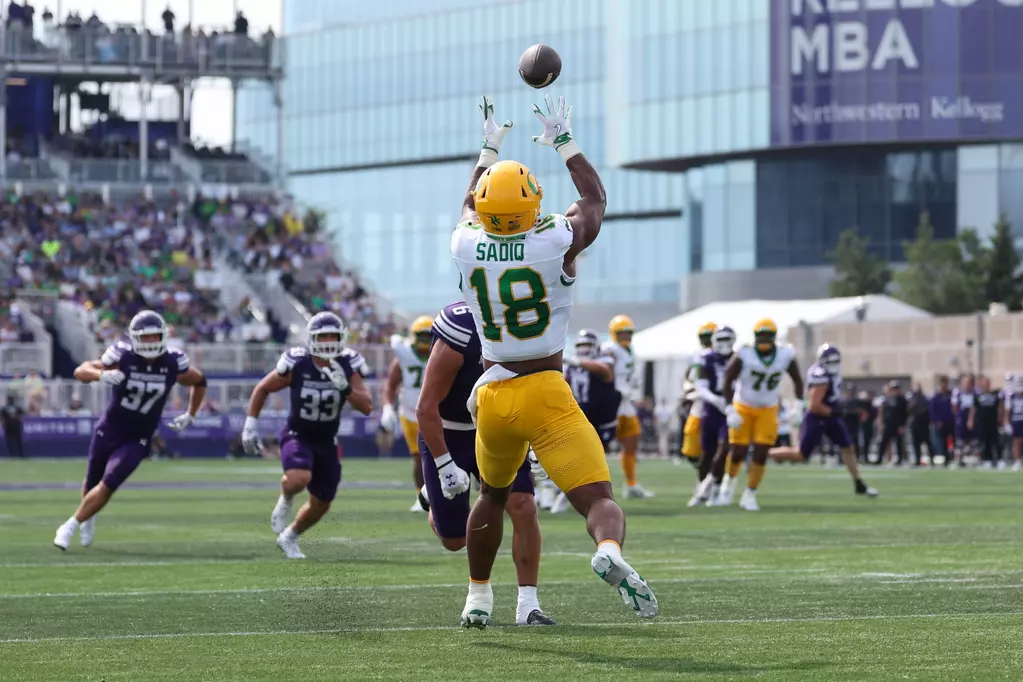
1.16: TE Kenyon Sadiq
1.30: WR Omar Cooper Jr.
2.50: CB D’Angelo Ponds
4.103: DL Darrell Jackson Jr.
4.110: QB Cade Klubnik
6.188: G Anez Cooper
7.228: S VJ Payne
Wolf Sports selections
1.02: S Caleb Downs
1.16: CB D’Angelo Ponds
1.30: WR Germie Bernard
2.50: LB CJ Allen
4.103: G DJ Campbell
4.110: CB Keionte Scott
6.188: LB Harold Perkins Jr.
7.228: TE John Michael Gyllenborg
Thoughts
Similar to the draft haul for Cleveland, the Jets appear to have a promising class based on the capital they had to work with alone—particularly four selections in the top 50. David Bailey was a somewhat polarizing prospect with many viewing him as the clear best pass rusher in the draft and others being lower on him (we gave him a Round 1-2 grade), and it will be very interesting to see how his career plays out with Arvell Reese on the other New York team. If given the chance, we would have traded down to the highest bidder and taken Caleb Downs a few spots later, so Downs (our No. 1 prospect) is the pick without moving.
Kenyon Sadiq was a slight surprise with the second first-rounder with the Jets connected more to wide receivers there, but they followed it up by trading up for Omar Cooper Jr. at the end of Round 1. While both were strong values where they were selected, we would have gone with D’Angelo Ponds and Germie Bernard based on our board; Ponds is another player that could have been had in a trade down, but the takeaway is that we follow best player available, which leads to major “hits” for us.
Of course, the Jets ended up getting Ponds in the second round, and he landed in a great spot under Aaron Glenn as a stylistic comparison to his head coach—and someone who will be allowed to play aggressive man coverage in New York. Despite taking Ponds earlier than where he went in real life, we still love the value we got in the second round with CJ Allen as an impact defender in middle of the defense.
The fourth round saw the Jets add a big defensive lineman in Darrell Jackson Jr. to help plug things up with Glenn wanting to have a top run defense, and then Cade Klubnik—thought of as a potential top pick early in his Clemson career—was their shot at quarterback to develop behind Geno Smith before likely targeting the position in 2027.
We would have first gone with DJ Campbell to help replace Alijah Vera-Tucker on the offensive line, and Keionte Scott would have immediately pushed for a role in the slot—giving us a cornerback trio of D’Angelo Ponds, Nahshon Wright, and Scott with excellent depth (Brandon Stephens, Jarvis Brownlee Jr., Azareye’h Thomas), along with a safety duo of Caleb Downs and Minkah Fitzpatrick.
For the final two selections, New York took Anez Cooper as a good value at guard, and then VJ Payne (who has some Kerby Joseph to his game) as an even better value at safety. Our choices would have been Harold Perkins Jr. and John Michael Gyllenborg. Overall, the class for the Jets will mostly be judged by whether David Bailey reaches they potential they saw in him as the No. 2 pick.